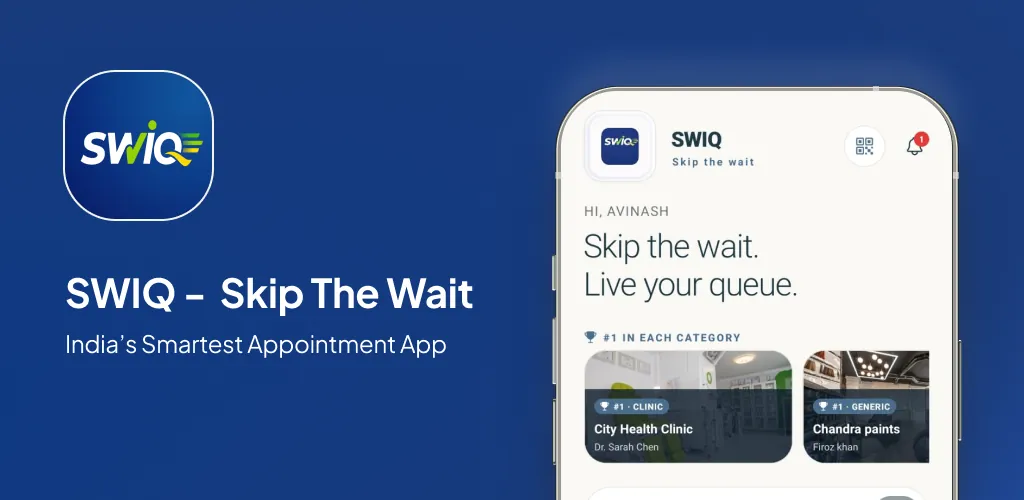
Queue manager app tools are the staff-side counterpart to customer-facing queue apps. While customers see their queue position and wait time, staff use a queue manager app to control the flow — marking customers as served, updating statuses, and managing the service order.
Key takeaways
- A queue manager app gives staff real-time control over customer flow.
- One-tap status updates keep the queue moving without manual tracking.
- Role-based access ensures each provider sees only their own queue.
- Analytics from the queue manager app drive better scheduling decisions.
What a queue manager app actually does
A queue manager app provides the staff-side interface for managing customer queues. It shows the current queue in real time, lets staff update customer statuses, and handles the service order from check-in to completion.
The queue manager app is what turns a static queue list into a dynamic, managed flow. Without it, staff rely on printed lists, verbal announcements, or memory — all of which break down during peak hours.
A good queue manager app is simple enough for front-desk staff to use without training, yet powerful enough to handle complex multi-provider operations. The interface should be clean, the actions should be one-tap, and the data should update in real time.
Why staff need a dedicated queue management tool
Staff cannot manage queues effectively using customer-facing tools. They need a different view — one that shows the entire queue, provider-specific queues, service durations, and real-time status updates.
A queue manager app eliminates the chaos of managing multiple paper lists, verbally announcing names, and manually tracking who is next. It gives staff a single source of truth for queue management.
The result is fewer mistakes, faster service, and happier customers. Staff spend less time managing the queue and more time delivering service.
How SWIQ's staff dashboard works
Real-time queue view. The staff dashboard shows every customer in the queue, their token number, service type, estimated wait time, and current status — all updating in real time.
One-tap status updates. Mark a customer as "being served" with one tap. Mark them as "completed" with another. The system handles notifications, queue reordering, and wait time calculations automatically.
Role-based access. Each provider sees only their own queue. The front desk sees the entire operation. No information overload, no confusion.
Built-in analytics. Track service times, queue flow, peak hours, and no-show rates directly from the dashboard. Use this data to optimize scheduling and staffing.
Who should use this guide
This guide is for business owners, front-desk managers, and operations teams evaluating queue manager apps. You need a tool that gives staff real-time control over customer flow without requiring extensive training.
Capacity planning comes first
A queue manager app is only as good as your capacity settings. Map your real capacity — service durations, staff availability, peak hour volumes — before deploying the dashboard.
Design the complete customer journey
The queue manager app should handle the full journey — from customer check-in to service completion. Each stage should update in real time on the staff dashboard.
Build a daily operating workflow staff can maintain
The queue manager app must have a workflow that staff can follow without thinking. One-tap updates, clear queue display, and role-based views keep operations smooth.
Make delays visible and useful
The queue manager app should track running delays in real time and automatically update estimated wait times for every customer in the queue.
Smart notification strategy
The queue manager app should send notifications automatically when customer status changes. Staff should not have to manually announce names or send messages.
Protect privacy by design
The queue manager app involves customer data. Role-based access ensures staff see only the information relevant to their role.
A practical implementation plan
Week 1: Set up the dashboard, add staff, configure roles. Week 2: Test with real customers. Week 3: Full deployment. Week 4: Review analytics and optimize.
Measure outcomes that matter
Track service time, queue flow, peak hours, and staff efficiency. These metrics tell you whether the queue manager app is improving operations.
Common mistakes
Mistake 1: Not training staff on dashboard workflow. Mistake 2: Giving all staff the same access level. Mistake 3: Not reviewing analytics regularly.
How to compare queue manager apps
Check: real-time updates, one-tap status changes, role-based access, analytics, pricing, and setup speed. SWIQ meets all of these criteria.
A realistic first 30 days
Days 1-3: Setup. Days 4-7: Testing. Days 8-14: Live operations. Days 15-21: Adjustments. Days 22-30: Review and optimize.
Practical next step: map your real availability, booking, walk-in, delay, and staff workflow before choosing software. Technology should simplify that flow rather than force every business into the same calendar.
Useful official resource
For additional context, read SWIQ product features. External references are selected to help readers verify platform, policy, or public digital-service information relevant to this guide.
Frequently asked questions
What is a queue manager app?
A queue manager app is a tool for staff and business owners to control customer queues in real time. It shows the current queue, lets staff update customer status, and manages service order.
How does a queue manager app help staff?
A queue manager app gives staff a real-time view of the queue, one-tap status updates, and role-based access so each provider sees only their own queue.
Can a queue manager app handle multiple providers?
Yes. A good queue manager app supports multiple providers, each with their own queue. The front desk sees the entire operation; each provider sees only their queue.
What features should a queue manager app have?
Real-time queue display, one-tap status updates, delay tracking, role-based access, analytics, and walk-in handling are essential features.
Can SWIQ work as a queue manager app?
Yes. SWIQ includes a staff dashboard with real-time queue management, one-tap status updates, role-based access, and analytics — all designed for queue control.
See SWIQ in action
Explore provider-controlled availability, QR booking, live tokens, delay tracking, staff access, and enterprise dashboards.
Launch the SWIQ web app