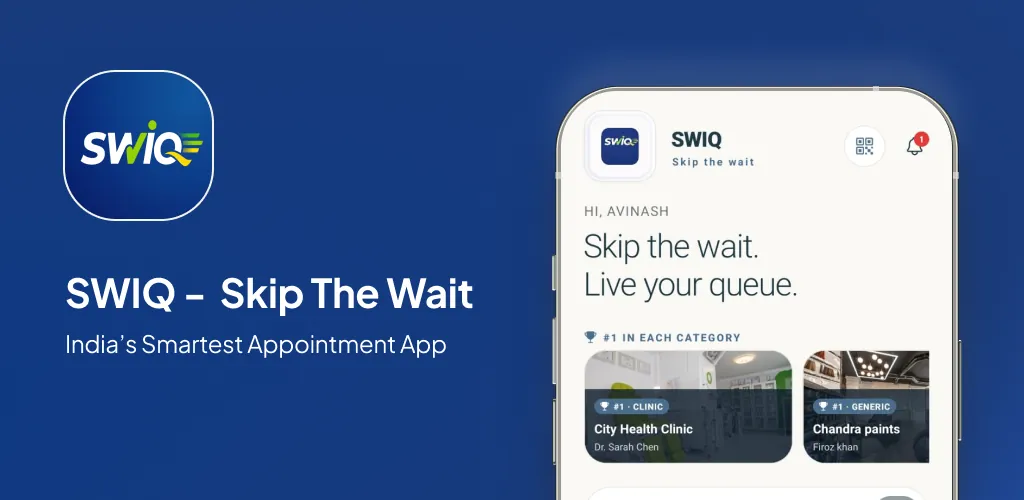
Queue system app solutions replace physical token machines and paper queue lists with a digital system that manages customer flow from check-in to service completion. Instead of printing a paper token, customers join the queue through a QR code or online booking.
Key takeaways
- A queue system app replaces physical token machines with digital queue management.
- QR code check-in eliminates paper tokens — customers join from their phone.
- Real-time queue tracking and delay notifications keep customers informed.
- The best queue system apps handle both appointments and walk-in customers.
What a queue system app replaces
Physical token machines have served businesses for decades. You press a button, a paper token prints with a number, and customers wait until their number is called. The system works, but it has significant limitations.
A queue system app replaces every component of this physical system. The token becomes digital — customers receive it on their phone. The display becomes real-time — customers see their position and wait time without staring at a screen. The notification becomes automatic — customers get push notifications instead of listening for verbal announcements.
The result is a queue system that works remotely, tracks data, and scales without additional hardware. No more paper tokens, no more plastic number displays, no more manual announcements.
How a digital queue system works
The flow is simple: customer scans a QR code or arrives for a booked appointment. They receive a digital token with a queue position. The queue system tracks their position in real time, sends delay notifications, and alerts them when their turn arrives.
On the staff side, the queue system app shows the entire queue in real time. Staff update customer statuses with one tap, and the system handles queue reordering, notification delivery, and wait time calculations automatically.
The queue system app also collects data — service times, peak hours, no-show rates, and queue flow patterns. This data drives better scheduling and staffing decisions.
How SWIQ delivers queue system functionality
Digital token system. Customers receive a digital token on their phone when they join the queue. The token includes their queue position, service type, and estimated wait time.
Real-time queue display. The staff dashboard shows every customer in the queue, their token number, current status, and estimated completion time — all updating in real time.
Automated notifications. The queue system sends confirmation, delay update, and turn arrival notifications automatically. No staff intervention required.
Unified appointment and walk-in queue. SWIQ manages a single queue that handles both online bookings and walk-in customers. No separate systems.
Who should use this guide
This guide is for business owners evaluating queue system apps. You are likely comparing multiple products, checking pricing, and trying to find a system that fits your workflow.
Capacity planning comes first
A queue system app is only as good as your capacity settings. Map your real capacity before opening your queue for booking.
Design the complete customer journey
The queue system should handle the full journey — from check-in to queue tracking to delay notifications to service completion.
Build a daily operating workflow
Staff workflow must be simple. One-tap status updates, clear queue display, and role-based views keep operations smooth.
Make delays visible and useful
The queue system should track running delays in real time and automatically update estimated wait times for every customer.
Smart notification strategy
Every notification should deliver actionable information. Queue confirmation, delay update, turn arrival — each notification tells the customer something they need to know.
Protect privacy by design
Queue systems involve customer data. Your queue system app must handle this data securely with encrypted storage and role-based access.
A practical implementation plan
Week 1: Set up your account. Week 2: Test with internal team. Week 3: Deploy and go live. Week 4: Review and optimize.
Measure outcomes that matter
Track wait time, customer satisfaction, queue flow, and no-show rate to measure queue system impact.
Common mistakes
Mistake 1: Not training staff. Mistake 2: Ignoring walk-in handling. Mistake 3: Setting optimistic slot durations. Mistake 4: Not reviewing analytics.
Digital vs. physical queue systems
Physical queue systems require hardware, paper tokens, and manual announcements. Digital queue systems work on phones, track data, and send notifications automatically. The transition is simple and the benefits are immediate.
A realistic first 30 days
Days 1-3: Setup. Days 4-7: Testing. Days 8-14: Live operations. Days 15-21: Adjustments. Days 22-30: Review and optimize.
Practical next step: map your real availability, booking, walk-in, delay, and staff workflow before choosing software. Technology should simplify that flow rather than force every business into the same calendar.
Useful official resource
For additional context, read SWIQ product features. External references are selected to help readers verify platform, policy, or public digital-service information relevant to this guide.
Frequently asked questions
What is a queue system app?
A queue system app is a digital platform that manages customer queues, replacing paper tokens and physical waiting rooms with real-time queue tracking and automated notifications.
How does a queue system app work?
Customers join the queue via QR code or booking. They see their position, estimated wait time, and receive notifications. Staff manage the queue through a dashboard with one-tap status updates.
What businesses need a queue system app?
Any service business that handles walk-ins or appointments — salons, clinics, dental offices, spas, diagnostic labs, banks, and government service centers.
Can a queue system app replace a physical token machine?
Yes. A queue system app replaces physical token machines with digital tokens, provides real-time tracking, sends notifications, and integrates with booking systems.
How do I set up a queue system app?
Set up your account, define services and durations, add staff, configure queue rules, deploy QR codes, and train your team. Most queue system apps can be set up in under 10 minutes.
See SWIQ in action
Explore provider-controlled availability, QR booking, live tokens, delay tracking, staff access, and enterprise dashboards.
Launch the SWIQ web app