Laboratory clinic near me: booking lab work at a laboratory clinic near you so sample collection lands before your consultation, not after. Book ahead. This guide covers Why the order of a visit matters, Shortlisting by collection hours and Booking the collection slot.
A laboratory clinic near me search is usually made under time pressure: a consultation is booked, and the sample collection needs to land before it rather than after. The difference between one smooth week and two wasted mornings is sequencing — pick the lab by its collection hours and turnaround, hold a collection slot, confirm how reports are delivered, and only then let the consultation sit in the same plan. This guide runs that sequence in order: how to shortlist labs near you, how to book the collection slot, what to carry, how reports reach you, and how repeat tests get scheduled without starting from zero every time.
Key takeaways
- Work backwards from the consultation date to place the collection slot.
- Collection hours often differ from the lab's published office hours.
- Confirm the report channel and turnaround before you pay anything.
- Keep every booking reference — it is the key to every later query.
Why the order of a laboratory clinic near me visit matters
Two appointments, one week, and a turnaround time in between: that is the whole planning problem. If the consultation is on Thursday and the lab quotes two working days, a Monday or Tuesday collection fits comfortably. A Wednesday collection does not, and the entire week's plan collapses into an extra trip. Work backwards from the appointment date before you open any booking page.
The right order also depends on what your doctor has asked for, so treat the requisition as the instruction sheet it is and follow exactly what it says. What you control is the calendar around it: collection booked in a slot rather than joined as a walk-in, delivery mode understood before payment, and the consultation held in the same week as the report arrival. The World Health Organization publishes general guidance on reading health service information, and the local version is practical: check the lab's stated turnaround on its own page, check the date it was last updated, and ask the counter to confirm it. Three appointments that depend on each other should never rest on an assumption you did not verify.
Shortlisting by collection hours
Collection hours rarely match office hours. Many labs start collecting early in the morning and stop well before the reporting team does, and a few run evening windows for people who work standard shifts. Read today's timings rather than the weekly average, note the cut-off time, and check whether the location you are looking at is the collection point or only the office — in multi-city chains those are often different doors.
Then check how each lab takes bookings. Some publish a link directly on their listing; others only offer a phone number, and a few still run first-come counters. Google's support pages for business listings explain how timings are verified and corrected, which is worth knowing when a listing shows hours that look months out of date. Shortlist three labs: distance and collection window decide the first cut, booking channel decides the second. If your doctor's list of tests is long, ask whether the lab offers home collection in your area and what its scheduling window looks like — for many working weeks that single question removes the whole commute. Our digital token system for diagnostic labs guide shows how the counter side of this runs.
Booking the collection slot
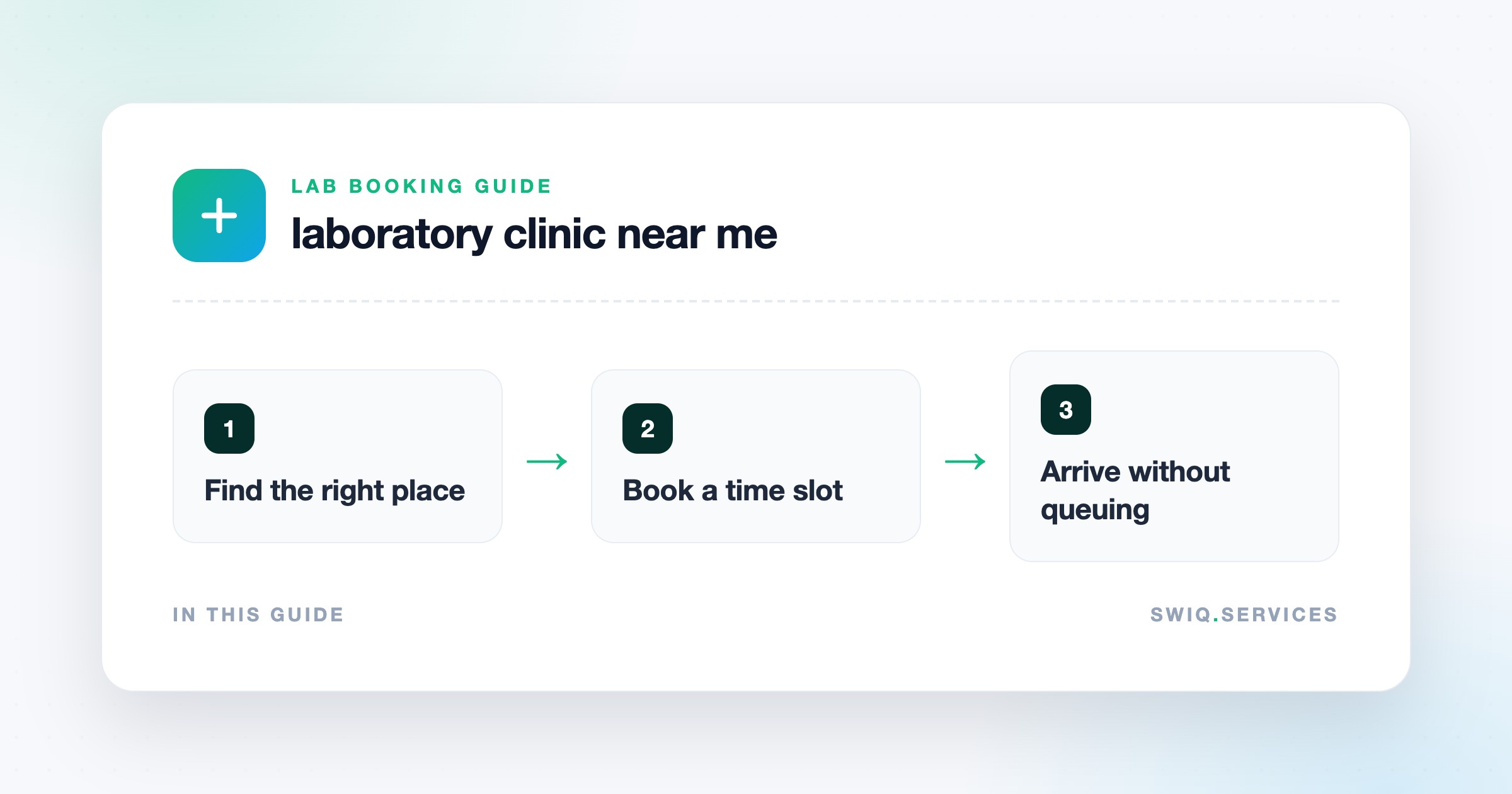
A collection slot should take under a minute to book: open the link, see this week's dates and the lab's stated collection window, pick a time, enter a name and number, and receive a reference. No account creation, no app install, no waiting for someone to call back between two other bookings. If a lab's flow takes longer than that, most people abandon it and try the next lab on the shortlist — which for the lab is free traffic walking away.
Two things are worth checking before you confirm. First, what payment modes the counter accepts and whether online booking lets you pay by UPI at the time of reservation — in India that is the default people expect, and it removes a queue on arrival. Second, how the reminder comes: a WhatsApp message the evening before is the channel people actually act on, and a message with a reschedule link saves the slot if your day changes. Clinics running this properly attach the confirmation, the address and the instructions to one thread, the pattern behind our appointment reminder app guide. Keep that thread; the reference inside it is what every later query starts with.
The requisition and records to carry
Everything the counter needs fits in one folder: the written requisition from your doctor, your ID, the booking confirmation with its reference, and any previous reports the lab has already issued for you. Carry the original and a phone photo of the requisition — the photo has saved many a morning when paper stayed at home in the wrong bag.
Two small checks prevent the classic return trip. Confirm the name on the booking matches your ID exactly, because a mismatched spelling can stall collection at the counter. And read any preparation instructions attached to the booking — the lab or your doctor will state what applies, and following those instructions is part of following the plan, not a step to improvise. Ask reception beforehand whether the counter needs anything else for first-time registration: some labs complete a one-time entry, and knowing that in advance turns ten minutes at the desk into two. If the visit is billed through an insurer or employer, carry that letter as well and ask which payment modes are accepted for it. Reach ten minutes before your slot; a slot-based collection desk cannot hold up the queue behind you.
Report delivery and the consultation
The collection is the easy half. The half that decides whether your consultation runs smoothly is how and when the report reaches you. Ask three questions at booking: in what form are reports delivered — printed, portal download or a link — what is the usual turnaround, and who do you contact if the date slips? Write the answers on the slip with the booking reference, because you should not have to reconstruct them later.
Then decide how you will receive the notification. Many labs send a message when the report is ready, and WhatsApp Business tools, documented at business.whatsapp.com, are how most Indian clinics push that update into a thread you already watch. Check the channel the day before your consultation; if the report has not arrived, call the lab with the reference rather than the name. Keep reports in one clearly named folder — paper or phone — so the consultation starts with documents instead of searching. If the lab offers delivery into a patient portal, confirm your login works before you need it; a forgotten password discovered an hour before the appointment is a preventable problem. The same discipline applies when tests repeat: the next collection should be a rebooking, not a fresh search.
Rebooking tests and planned packages
Some tests repeat on a schedule your doctor sets, and each cycle is a chance to improve the logistics. Book the next collection before you leave the first, note the reference, and set a reminder a day ahead — the pattern is identical to the one in our clinic booking system guide, where the follow-up is attached to the first visit from the start. When several tests get scheduled together, ask whether they can be handled in one sitting at one counter instead of split across visits.
Peak hours deserve a strategy of their own. Early mornings and month-end days draw the queues; a booked slot lets you walk past the waiting bench, and a live token display tells you honestly how far back you sit if you do join it. Busy labs handle that with a token queue at the door, described in our queue management system guide. Compare your three shortlisted labs on exactly these points — collection hours, booking channel, turnaround statement, delivery mode, and how easily the next slot is fixed. Indian cloud booking plans start around ₹777 per month, and the first 300 bookings on SWIQ are free every month, so labs can test the flow on real bookings before committing to anything.
Conclusion
A laboratory clinic near me visit only works as part of a sequence: shortlist by collection hours, hold a slot with a reference, carry the requisition in one folder, confirm how and when reports are delivered, and place the consultation after the expected arrival of the report — then fix the next collection while the first is still fresh. Work through those steps in order and compare three labs the same evening. If you run a lab, publish the same five details where patients can read them. See how appointment booking and queue management software from SWIQ runs that daily flow, or book a free demo and we will walk through your counter with you.
Practical next step: open your consultation confirmation, count backwards by the lab's stated turnaround, and book the collection slot today with a reference you can find in one thread.
Related SWIQ pages: Diagnostic lab booking software India · Book a free demo · digital token system for diagnostic labs · clinic booking system · appointment reminder app · queue management system
Frequently asked questions
How do I find a laboratory clinic near me with early slots?
Open the listings and read today's collection hours rather than the weekly average, because many labs open for collection earlier than the rest of the building. Shortlist three, check which of them publish a booking link, and confirm the first available slot on your phone before you travel.
Should I book collection before my consultation?
Work backwards from your appointment date and ask the clinic which order fits what your doctor requested. If reports are needed for the consultation, book collection early enough for the lab's stated turnaround, then hold the consultation slot in the same plan so nothing depends on luck.
How do I get reports before the appointment?
Ask at booking how reports are delivered — printed at the counter, downloaded from a portal, or sent as a link — and what the usual turnaround is. Keep the booking reference, check the delivery channel the day before, and contact the lab with that reference if the report has not arrived.
How does SWIQ help a laboratory clinic manage bookings?
SWIQ gives a lab one enforced calendar for online, chat and walk-in collection slots, WhatsApp reminders before the visit, UPI payment options at booking, and a token queue for the counter. Setup takes about two minutes, staff accounts keep the desk organised, and the first 300 bookings are free monthly.
See SWIQ in action
Collection slots on one enforced calendar, WhatsApp reminders before the visit, and a token queue for the counter rush.
Book a free demo