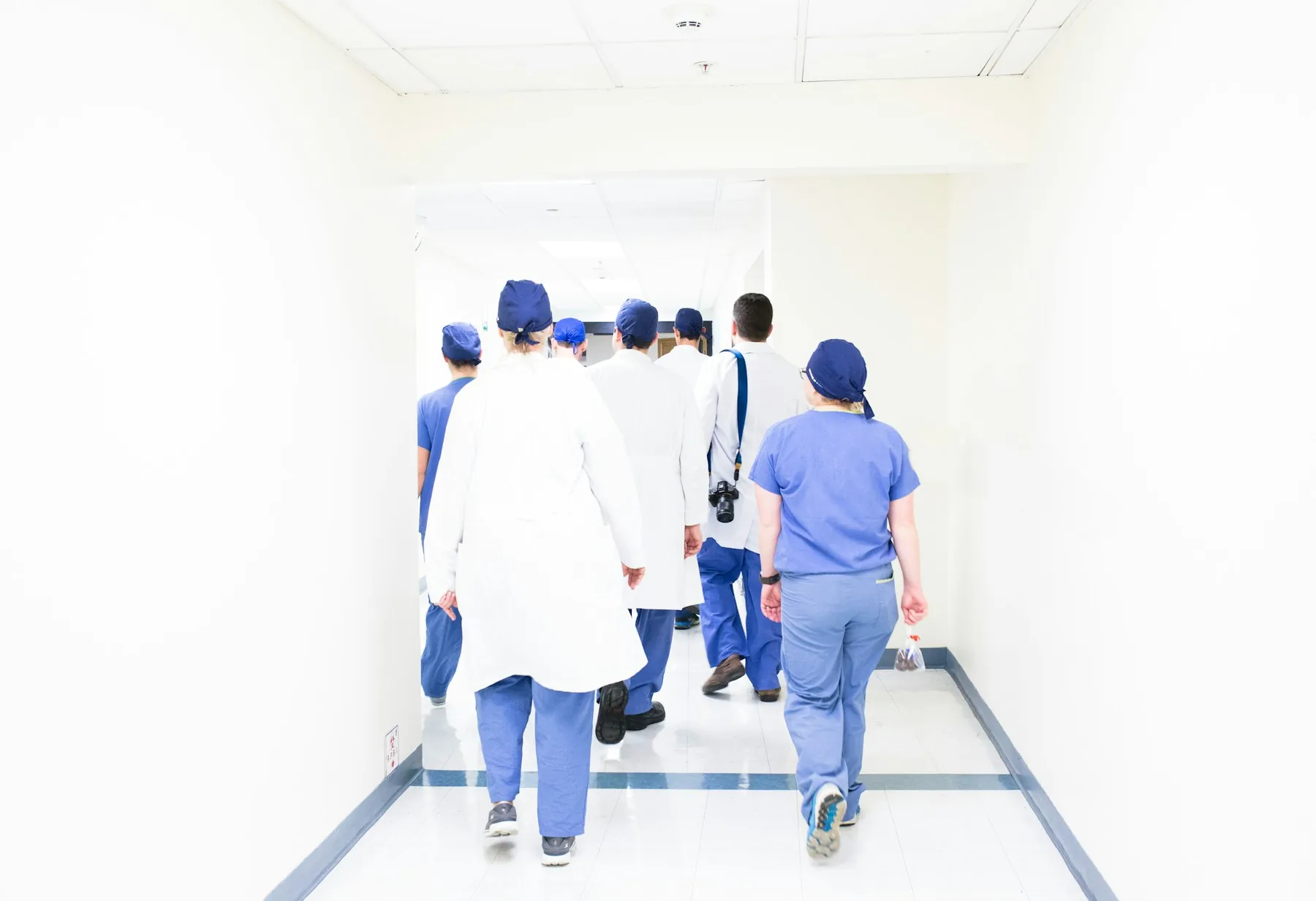
Digital token system for diagnostic labs is the practical answer to one predictable problem: between 7 am and 9 am, fasting patients arrive together for blood tests before office, school, and travel. A single sample collection counter ends up serving a queue nobody ever planned, while the same counter sits quiet until 11 am. This guide shows how a digital token system for diagnostic labs spreads that compressed load using pre-booked slots, fasting instructions sent the evening before, an ordered counter flow at the collection desk, and report-ready notifications — and the four numbers you should read every morning to know whether it is working.
Key takeaways
- The rush is structural: fasting tests compress demand into roughly two hours.
- Slots, not lectures, are what actually move patients to quieter times.
- Tokens must merge pre-booked patients and walk-ins into one counter order.
- Track wait time, fasting-slot no-shows, staff per counter, and early-token share.
Why labs see a 7–9 am fasting-sample rush
Walk into a busy Indian diagnostic lab at 7:45 am and you see the same scene in every city: people holding forms in one hand and phones in the other, three of them asking whether water is allowed, and one receptionist trying to reconcile walk-ins with patients who booked by phone yesterday. The crowd is not a failure of discipline. Fasting-dependent tests — lipid profile, fasting blood glucose, and the health packages built around them — require people to arrive before they eat, and arriving before breakfast usually means arriving before work. Demand stops spreading across the day and becomes a spike.
The spike has a cost. Sample collection takes longer because the phlebotomist handles questions and forms at the same time as draws. Patients told nothing about timing arrive late in the window and get angry when the queue does not move. And the reception team loses the quiet half of the morning to firefighting instead of reporting work. Public health screening programmes run with the Ministry of Health and Family Welfare and documented on mohfw.gov.in add periodic load on top of the routine pattern, so labs that plan only for a normal Tuesday are regularly surprised.
How a digital token system for diagnostic labs spreads the rush
A digital token system for diagnostic labs does one useful thing: it converts an unstructured crowd into an ordered sequence with a known position and a known wait. Every patient gets a token that carries either a booked slot or a walk-in join time, and the counters call from that single sequence. Nobody has to stand at the desk to protect their place, so the physical space around the collection window stops filling simply because people fear losing order. Once standing is optional, the room holds the same number of patients comfortably.
The spreading effect comes from the combination, not the token alone. First, appointment slots cap how many people are asked to arrive inside the 7–9 am window; a lab that opens forty slots at 7:30 am and forty at 9:30 am has already halved the peak before anyone reaches the door. Second, the token tells each patient honestly how long the wait is, which is what makes a 9:30 am slot feel like a choice rather than a demotion. Third, walk-ins are merged into the same sequence instead of being handled as a separate argument at the desk. Our guides to appointment booking for diagnostic labs and the broader digital token system describe this merge in detail: one ordered queue beats two competing ones every time.

Send fasting instructions and slots ahead of arrival
The cheapest way to shorten a morning rush happens the evening before. When a booking is confirmed, the message a patient receives should contain the slot time, the lab address, what to bring, and the preparation notes their test requires — including that fasting tests mean no food, and a plain note about drinking water and continuing prescribed medicines unless their own doctor has told them otherwise. Preparation rules are set by the test and by the treating clinician, so labs should reproduce the instructions supplied with the test menu rather than inventing their own. General reference material for citizens is available through the National Health Portal of India, and labs that handle reports and records often point patients to india.gov.in for official public-service information.
The second half of the evening message is the slot itself. Offer two or three alternatives — "your slot is 7:15 am; 9:40 am and 10:20 am are open" — and a large share of patients will move on their own, particularly repeat patients who only came early because they did not know better. Add a reminder four hours before and another at the door of the slot, and confirmations become the mechanism that levels the day. This is the operational core of an appointment booking checklist for diagnostic labs: what is sent, when, and by whom.
The sample collection counter flow
At the desk, the flow should be short enough that a phlebotomist never has to act as a receptionist. A working sequence looks like this:
- Arrival scan or check-in. The patient shows the booking reference or token at reception; the system marks them arrived and starts their wait clock.
- Token issued or confirmed. Walk-ins receive a printed token; booked patients see their existing token and position on the display.
- Document check before the draw. Forms, identity, and package verification happen at a separate point or before the call, not with a needle already prepared.
- Counter call. The next token appears on the screen and, where the patient opted in, on their phone — no shouting across the waiting room.
- Collection and disposal. Tubes are labelled at the counter, and the token status moves to collected the moment the sample is taken.
- Exit information. The patient is told when and how the report will be available before they leave the desk.
Every step that can be moved out of the draw moment should be. A counter that spends ninety seconds on paperwork and ninety on collection serves roughly half as many people as one where paperwork was finished in the queue. Staggering staff across the two-hour window only works if you can see the queue forming in advance.

Report-ready notifications close the loop
The rush at a lab is partly a collection problem and partly a communication problem. Patients crowd the desk a second time because they do not know when the report will be ready, so they call or walk in again. A report-ready notification removes that second visit: the patient gets a message when the report is available for download or pickup, with the method stated plainly.
Notifications also change behaviour at booking. When a patient trusts that they will be told something, they are more willing to take a later slot, because they no longer need to stand at the counter to feel informed. Send three messages per visit — confirmation with instructions, a call-to-queue update during the visit, and a report-ready alert afterwards — and keep the wording identical across branches. Three well-timed messages do more for morning discipline than any signboard above the collection window.
What to track every morning
Run the system for a week, then read four numbers each morning — they tell you whether the design works or whether you have only digitised the same crowd:
- Collection wait time — median minutes from arrival check-in to sample draw, split by hour. If the 8 am median is above ten minutes, your slot caps or staffing are wrong.
- No-show on fasting slots — the share of 7–9 am slots that never arrive. High no-shows mean you are over-allocating the peak and under-allocating the rest of the morning.
- Staff per collection counter during the rush window. The ratio should be higher at 7:30 am than at 11 am; if it is flat all day, you are staffing to habit rather than to load.
- Share of tokens issued before 9 am. A falling share with a steady total is exactly the result you want — the same work, spread out.
Review them weekly for a month before changing slot length or hiring. Most labs find that one adjustment — moving the 7 am slot cap down by a third and adding a 9:40 am block — flattens the curve more than any hardware purchase. Our overview of queue management and appointment booking software explains how these reports are produced across branches.
Common mistakes labs make with tokens
The most common error is issuing tokens without changing anything upstream. If every booking still says "come at 7 am", the token system only reorders the same crowd — the queue is fairer, but the peak is untouched. The second mistake is running two systems: appointments on one register and walk-in tokens on a paper pad. Patients can tell immediately, and the argument moves from "who is next" to "which queue am I in".
Other frequent failures: opening slots weeks ahead without checking staff rosters, calling tokens on the phone only and never on the display, labelling the token as a queue number but then serving booked patients first, and never measuring the four numbers above so nobody can prove the change worked. A digital token system for diagnostic labs earns its cost only when the slot plan, the counter order, and the reporting are treated as one workflow rather than three separate purchases.
Conclusion: spread the rush instead of absorbing it
A 7–9 am rush at a diagnostic lab is predictable, and predictable things can be designed around. Cap the peak with honest slot capacity, send fasting instructions and alternatives the evening before, run one ordered queue that merges booked patients and walk-ins at the collection counter, tell patients when the report is ready, and read four numbers every morning. Do that for a month and the same daily workload stops arriving in a single two-hour block. That is what a digital token system for diagnostic labs is actually for: not a screen at the desk, but a calmer, evenly loaded morning. Book a free demo and we will map your current rush hour against a token and slot plan built for your counters.
Practical next step: for one week, note the arrival time of every patient at your busiest counter, then set your 7–9 am slot cap to match the staff you actually have at 7:30 am — not the staff you wish you had.
Related SWIQ pages: Queue management software India · Book a free demo · appointment booking for diagnostic labs · digital token system
Frequently asked questions
What is a digital token system for diagnostic labs?
A digital token system for diagnostic labs issues every visitor a numbered token that is linked either to a pre-booked slot or to a walk-in join time. The token sets the order in which the sample collection counters call people, shows the live wait on the waiting-room screen, and can be sent to the patient's phone so they can sit down instead of standing at the counter.
How does a digital token system reduce the morning rush?
It moves demand instead of only serving it. Pre-booked slots cap how many patients are asked to arrive between 7 am and 9 am, fasting instructions go out the evening before so people arrive ready, and tokens call patients in a predictable order. Patients who can shift to a 9:30 am slot usually do once they see a realistic wait.
What should a diagnostic lab track after launching tokens?
Track four numbers weekly: collection wait time from arrival to sample draw, no-show rate on fasting slots, staff assigned per collection counter during the rush hour, and the share of tokens issued before 9 am. Review them for a month before you change slot length or staffing.
Do patients need a smartphone to use lab tokens?
No. A walk-in can be given a printed token at the reception desk and still join the same ordered queue. The phone channel is optional and is mainly used to deliver the token number, wait updates, and the report-ready notification.
Can SWIQ support a digital token system for diagnostic labs?
Yes. SWIQ combines pre-booked appointment slots, walk-in tokens, live queue and delay display, reminder and report-ready notifications, staff accounts, and per-branch reporting for diagnostic labs and polyclinics.
See SWIQ in action
Pre-booked slots, walk-in tokens, live delay display, fasting reminders, and report-ready notifications for diagnostic labs.
Book a free demo