
You can reduce patient wait time in a US clinic without adding clinical staff -- because most of the delay is produced by the schedule, the rooming sequence and the absence of honest communication, not by the providers. A late start at 8:15 becomes a 40-minute wait by 10:30, and nobody in the building is able to explain why. These nine changes are ordered from biggest impact to smallest, and the first five can be running by the end of next week.
Key takeaways
- Set slot lengths from real visit data; a five-minute overrun per visit cascades into a 40-minute afternoon.
- Fix the on-time start -- the first missed slot of the day predicts the rest of it.
- Faster rooming and digital pre-visit forms move essential work out of the exam-room timeline entirely.
- Use targeted overbooking only where no-show data by slot supports it, and cap it explicitly.
- Tell patients honestly when the clinic is running late -- an explained wait is a tolerated wait.
Where US clinic wait time actually comes from
Four sources account for most of it. Schedule drift: a 15-minute slot that really takes 20 pushes every subsequent appointment later, and by mid-morning the clinic is 30 minutes behind without any single visit feeling unusually long. Morning cascade: the day's first no-show or late provider compresses everything behind it, because the buffer (if any) was already consumed before the second patient arrived.
Rooming and documentation: vitals taken inconsistently, forms completed in the room, and providers finishing notes between visits all add per-patient minutes that compound across a full session. And communication silence: when the clinic is running late, patients are told nothing -- so each minute is experienced as neglect rather than as a delay with a reason, which is what turns a wait into a complaint or a lost patient.
The important structural fact: none of these four requires clinical capacity to fix. They are scheduling and communication problems wearing a clinical costume -- which is why the changes below need agreement, not budget, and why the first one costs nothing at all and takes one staff meeting.
The nine practical changes
Ordered by impact. Most clinics can complete the first four within a month, and the last five are policies that keep the gains from eroding.
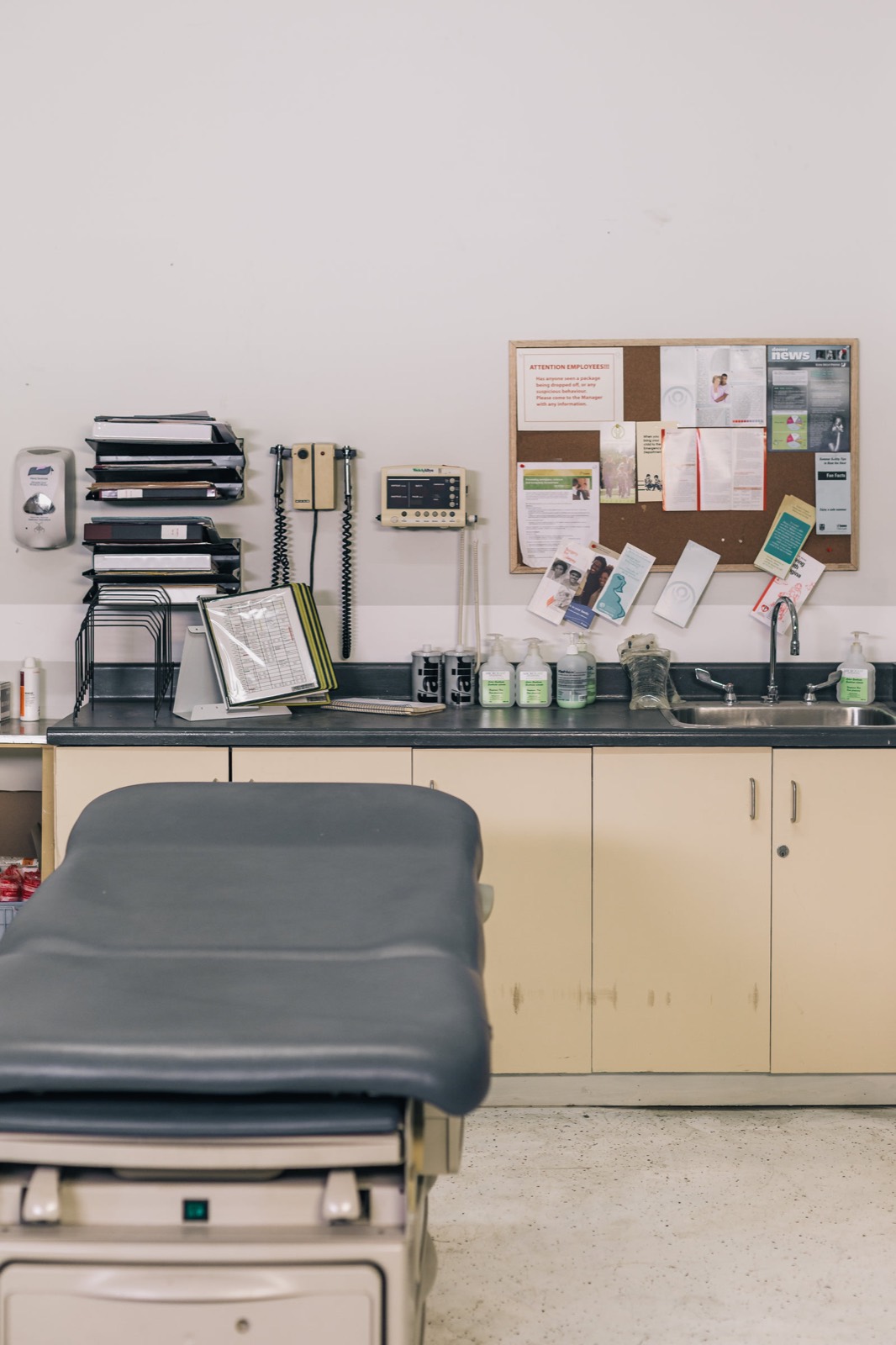
Take the nine to a 20-minute staff meeting and assign the first four by name -- the list only changes the clinic once each item has an owner and a date.
- Audit slot lengths against real visit times. Compare booked durations with check-in-to-check-out data for one month; new-patient and follow-up slots rarely need to be identical.
- Protect the on-time start. The first slot of the day sets the clinic's clock -- a provider starting 15 minutes late makes every later patient wait 15 minutes.
- Move intake out of the exam room. Digital pre-visit forms and vitals at check-in remove five to ten minutes per new patient from the clinical timeline.
- Reserve same-day slots deliberately. Hold a small block for acute walk-ins so urgent arrivals stop breaking the booked schedule entirely.
- Use targeted overbooking, capped. Where no-show rates by slot are known, overbook only those windows, with an explicit daily cap and a reason recorded.
- Send confirmations plus a 24-hour reminder. No-shows are usually forgettings; a reply-able reminder converts them into reschedules.
- Room with a standard script. Consistent rooming -- vitals, meds, reason -- stops each medical assistant improvising a different sequence.
- Announce delays honestly. A front-desk message when the clinic runs 20-plus minutes behind costs nothing and defuses the room.
- Track two numbers weekly. On-time start rate and average check-in-to-provider time -- visible numbers improve on their own.
The one number to track weekly: on-time start
If a clinic tracks only one metric, make it the on-time start rate: the share of first appointments of each half-day that begin within 10 minutes of the scheduled time. It is the earliest signal of schedule drift, it is measurable from the existing EHR timestamps, and it predicts the rest of the session better than any other single figure. Pair it with average check-in-to-provider time and you can see both the trigger and the consequence on one line each week.
Expect the usual measurement traps: rooming timestamps recorded at the wrong moment, and check-in defined differently at different desks. Fix the definitions before arguing about the numbers -- the mechanics of getting two clean timestamps are covered in patient wait time tracking. How to compute it: for each half-day, take the first scheduled appointment, compare its recorded start against the slot time, and count it on-time within 10 minutes. Plot the weekly share where the whole team can see it -- clinics that do this for a quarter report the number becoming self-policing, because providers start protecting their own first slot once the line is public.
- On-time start rate -- share of first appointments of each half-day beginning within 10 minutes.
- Average check-in-to-provider time -- the patient's real experience of the schedule.
- Review both weekly, on the same page, with the provider whose session they describe.
Handling the 'sorry for the delay' conversation
When the clinic is running behind, one honest message at the front desk outperforms ten individual apologies delivered at minute 30. The message has three parts: the fact ("we are running about 25 minutes behind today"), the reason in one clause ("an urgent visit this morning"), and the patient's options ("your wait should be about 15 minutes, or I can reschedule you for later today"). Patients who hear this at check-in wait noticeably more patiently than patients who discover the delay entirely alone -- this is one of the most consistently replicated findings in service psychology research.
Train the desk to say it before being asked, and to repeat it at intervals when the delay grows. The alternative -- silence followed by a rushed visit -- is what generates the online reviews that quietly cap a clinic's new-patient growth. The scripting pattern is the same one salons use; see salon queue management for the retail-flavoured version. Write the message down and keep it at the desk: clinics that script the delay notice find their staff actually use it, while clinics that leave it to improvisation discover who hates speaking up.
What patients actually forgive
Patients forgive delay far more readily than they forgive invisibility. A clinic that shows the sequence, quotes honestly and acknowledges an overrun keeps its patients; a clinic with shorter waits but a silent front desk loses them -- the same wait, differently experienced. The practical implication for any US clinic: after the scheduling fixes above, invest the next dollar in communication -- a check-in message, an honest estimate, a text when the wait exceeds a threshold -- rather than in waiting-room furniture, which has never once explained anything to a waiting patient.
The deeper operational fixes -- slot redesign, targeted overbooking strategy, rooming standardization -- are covered step-by-step in how to reduce patient waiting time, and the front-desk layer in front desk efficiency for US clinics.
Run the nine changes in order, measure the two numbers weekly, and the waiting room becomes quiet for a reason other than frustration -- usually within a single month, and without adding a single new hire. The communication fixes land the same day; the scheduling ones take a fortnight of honest discipline. Do both.
Frequently asked questions
How long should a patient wait in a US clinic?
For booked appointments, service beginning within 10-15 minutes of the scheduled time is the range most patients accept; beyond 20-30 minutes, satisfaction drops sharply unless the delay was communicated. Track your own 90th percentile rather than the average -- the tail is what patients remember and review.
What is the fastest way to cut waits without adding staff?
Fix the on-time start and audit slot lengths. Most clinic delay cascades from the first missed slot of the day and from visit durations that no longer match the book -- both are schedule problems, not staffing problems, and both can be corrected within a week.
Is overbooking appointments acceptable practice?
Targeted overbooking is common where no-show rates by slot are measured, but it should be capped, documented and reviewed -- otherwise it converts no-show savings into a full waiting room. Start with the slots that historically no-show, never the whole day, and publish the cap to the front desk.
How do I explain delays without sounding defensive?
State the fact, a one-clause reason and the patient's options at check-in, before being asked. 'We are running about 25 minutes behind after an urgent visit -- your wait should be 15, or I can move you to 3:30.' Explained waits are tolerated far better than discovered ones.
Which single metric best predicts a bad patient experience?
On-time start rate for first appointments of each half-day. It signals schedule drift early, is easy to extract from existing timestamps, and its decline reliably precedes the rise in waiting-room complaints by days -- usually long before patients mention it themselves. Track it weekly and compare it against the complaint trend.
See SWIQ in action
SWIQ tracks check-in, rooming and provider-start timestamps automatically -- so the nine changes above are measurable from the first week.
Launch the SWIQ web app