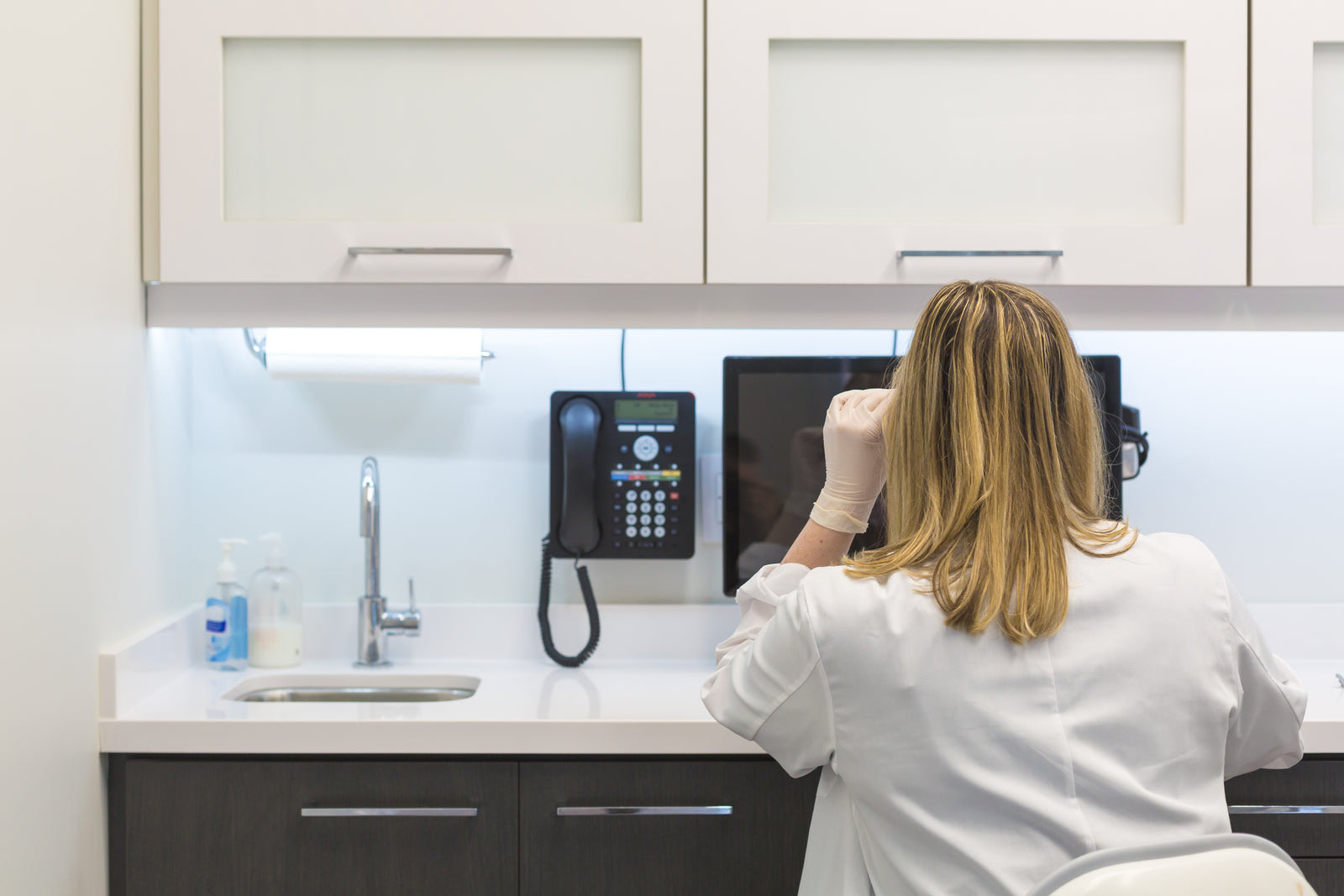
Hospital queue management India is four queues pretending to be one visit. A patient registers, waits for OPD, waits again for a lab or imaging slot, collects a report or medicine, and pays -- and each stage hands over to the next with a delay that belongs to nobody. The total waiting routinely exceeds the time with a clinician by a wide margin, and the family goes home remembering the corridor rather than the consultation. This guide walks the chain, the fixes at each handoff, and the small set of numbers that exposes where the day is lost.
Key takeaways
- Most hospital waiting happens in the handoffs between departments rather than inside any single one.
- Give every stage its own sequence number rather than one token that dies at the OPD door.
- Separate streams by purpose -- registration, diagnostics, billing, pharmacy -- so one long task never stalls everyone.
- Quote honest waits at each counter; families accept twenty true minutes far better than five false ones.
- Track five numbers weekly: wait per stage, patients per hour, walkaways, rework loops and the worst hour.
The four queues inside one hospital visit
Start at the gate and the structure becomes clear. Queue one is registration and any pre-procedure paperwork. Queue two is OPD: the wait for a consultation room, then for the doctor, then for the prescription. Queue three is diagnostics -- blood tests, imaging, ECG -- which often requires its own registration and its own payment before the patient can even be tested. Queue four is collection and billing: reports, medicines, discharge documents, and the final settlement.
Each queue has its own owner, its own peak and its own rules, and the patient experiences them as a single unmanaged day. The compounding effect is what makes hospital visits feel endless: a 15-minute delay in OPD pushes the lab appointment late, which pushes report collection past the radiologist's break, which pushes the final consultation past the counters' closing time. Nobody did anything wrong; nobody was tracking the chain either.
Hospital queues also carry clinical risk that retail queues do not -- a late registration is an inconvenience, a delayed triage is a different matter -- which is why priority rules must be explicit and visible everywhere.
Where the day is actually lost: the handoffs
Observe one family's visit with a stopwatch and the pattern repeats across hospitals of every size. Registration asks for details already on file from last month. The OPD assistant calls numbers out of order for a patient who arrived later. The doctor finishes at 11:40, and the patient reaches the lab at 12:05 to find the fasting sample window closed. Payment happens twice, at two counters, with two different queues.
The measurable signature of handoff delay is rework: the form filled twice, the appointment missed and rebooked, the report collected on a second visit. Rework is invisible in departmental reports because each department finished its own step on time. Only the family knows the total, and they express it as a single verdict about the hospital rather than as four separate complaints.
Watch the clock at three points and the handoff problem becomes concrete: the moment OPD finishes, the moment the sample is collected, and the moment the final bill is printed. The gaps between those points are owned by nobody, they are usually longer than any single department's queue, and they are where a family decides whether the visit felt efficient or endless.
Fixing each handoff in sequence
The rollout that works replaces one ritual at a time rather than launching a project on a Monday:
- Registration first. Every arrival gets a sequence number, details are verified rather than retyped, and the wait estimate is visible at the desk. This is the cheapest fix and it protects every stage downstream.
- OPD sequencing made explicit. One serving display, a written priority rule (emergencies, senior citizens, booked slots), and a named person who owns the sequence per shift. Out-of-order calls should be visible policy, not whispered exceptions.
- Diagnostics connected to the OPD. Book the test while the patient is still with the doctor where possible, so the lab queue is scheduled rather than walk-in, and payment happens once instead of twice.
- Collection and billing pre-staged. Reports and medicines are kept ready against the token, so the last queue of the day is a handover rather than a search.
- Discharge treated as a queue. Discharge summaries prepared before noon, pharmacy and billing settled in parallel, and beds released on a clock rather than on a mood.
Steps one and two alone typically remove most of the visible crowd in the lobby.
The three biggest levers in hospital queue management
If the hospital can only do three things this quarter, choose the ones with the widest reach. All three are communication rather than construction: they change what the family can see and what the team knows, without a single new room or counter.
The first lever is visibility. A serving number and an honest estimate at every counter costs a screen and a discipline, and it removes the repeated question that consumes more front-desk time than any form. The second is payment: where diagnostics, consultation and medicine are settled at separate counters, every family queues two or three times for a single episode, and the total wait grows with each counter regardless of how fast each one runs. Settling once, or at least keeping a single sequence across counters, is worth hours across a month of OPD.
The third is remote turn updates. A WhatsApp message saying the consultation is three away lets relatives wait at the canteen instead of crowding the corridor, which improves the experience for everyone still seated. Together these three are the backbone of hospital queue management in India, and they are all implementable inside a fortnight:
- Show the queue: a serving number and honest estimate at every counter, so families stop asking reception the same question every six minutes.
- Separate payment from service: a patient should never queue twice for one episode, so settle diagnostics and OPD at a single point where possible.
- Send turn and readiness updates by SMS or WhatsApp, so relatives wait outside or at the canteen instead of crowding corridors and doorways.
- Post the priority policy visibly at each desk: emergencies bypass by rule, and written exceptions are read as policy rather than favouritism.
Five numbers the hospital should see every week
Collect five figures per department per week: average wait at registration, average wait for OPD consultation from token to doctor, lab turnaround from arrival to sample, billing counter wait, and walkaways or rework episodes (patients who left, missed a service, or returned because something was not completed). Then find the single worst hour of the week for each -- in most Indian hospitals it is a short, predictable window rather than the whole morning.
Five numbers in five minutes of reading tells you which of the four queues to attack next week, and whether last month's change survived contact with a festival week. Report them by department rather than by hospital, because a healthy average across three departments hides the one counter that is failing every morning; and always record the worst hour alongside the average, since Indian hospital demand concentrates into short, predictable windows that averages flatten into invisibility.
The measurement method is set out in queue measurement basics; the OPD-specific implementation lives in digital queues for government hospital OPDs, and the end-to-end metric view in hospital patient flow metrics.
Frequently asked questions
What is the biggest cause of long waits in Indian hospitals?
Unowned handoffs between departments rather than slow clinicians. Registration, OPD, diagnostics, pharmacy and billing each finish their own step on time while the patient waits between them -- and because no single team measures the full episode, nobody is accountable for the total. Fixing the handoffs usually moves the total more than adding consultation slots does.
Should hospitals separate walk-ins from appointments?
Yes, into two visible streams that interleave rather than compete. Booked patients keep their slot; walk-ins get a token and an honest estimate. The failure mode to avoid is seating walk-ins first because they are standing in front of you, which quietly destroys the value of booking for everyone who planned ahead.
How do government OPD queues differ from private ones?
Volume and profile: a government OPD handles far higher footfall, more repeat visits and more accompanying family, with staffing ratios that cannot absorb it. The same mechanics apply -- numbering, visible sequencing, honest estimates -- but starting with a display and issued tokens at registration matters more than any appointment feature.
Do token systems work for whole hospitals or only clinics?
Whole hospitals, provided each stage keeps its own sequence rather than one number carrying the patient everywhere. A single token that dies at the OPD door recreates the problem at the next counter; stage-level tokens with a shared patient record are what make the chain measurable.
How long should hospital registration take?
For a patient with an appointment and documents in hand, a few minutes is reasonable; retyping last month's details is the usual cause of longer waits. Verify rather than re-enter, and push repeat patients into a fast lane -- the second visit should always be shorter than the first, and that is what hospital queue management at the front door comes down to.
See SWIQ in action
SWIQ links registration tokens, OPD sequencing, turn updates and stage-wise wait reporting into one hospital queue view, from the front door to discharge.
Launch the SWIQ web app