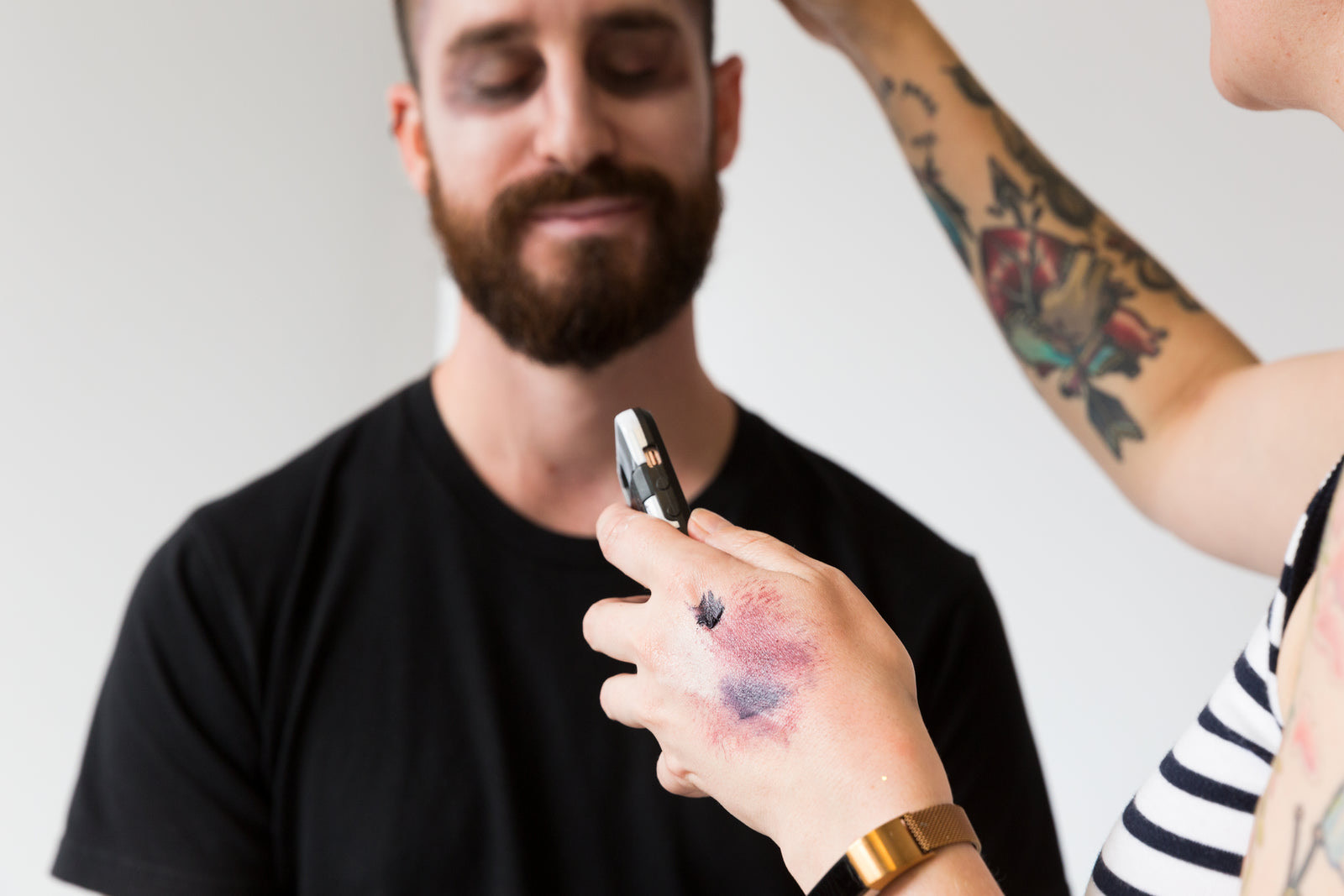
Bridal makeup studio appointment queue management is a different problem from ordinary salon flow, because a single customer occupies a chair for four to six hours while the walk-in traffic does not pause. Indian studios face it in wedding season, when trials, mehendi looks, haldi mornings and the wedding-day booking overlap with regular clientele. Studios that survive it do two things well - they build the bridal calendar backwards from the wedding date with honest service durations, and they run the wedding morning as a token queue so family members and walk-ins never stall the bride's slot.
Key takeaways
- Build the bridal calendar backwards from each wedding date, with honest durations: trial 90 minutes, bridal look 3-4 hours, family 45 minutes each.
- Take a deposit to confirm a bridal date; unconfirmed bridal holds are the silent cause of double-booked mornings.
- Run the wedding morning as a token queue: every family member takes a number, and the bride's slot is protected in writing.
- WhatsApp confirmations at 7 days, 24 hours and 2 hours cut the late arrivals that push the whole morning later.
Why bridal season breaks makeup studios
A normal salon service is 20-45 minutes. A bridal booking is a trial session (90 minutes), a mehendi-day look, a haldi look, the wedding-day bridal application (three to four hours of chair time), plus the family - mother, sisters, aunts - who arrive as a group and each need 45 minutes. Multiply by the number of weddings the studio accepts in a season and the arithmetic breaks: the profitable bridal bookings consume exactly the hours when walk-in and regular customers also show up. Most studios respond by hurrying everyone, which degrades the one service they are known for. The better response is structural: protect bridal slots in the calendar, and queue everything else around them explicitly rather than by whoever shouts first.
The warning sign is a calendar full of optimistic durations: when every slot runs long by design, the studio absorbs the overrun and the customer absorbs the delay. Studios that time a handful of real bookings before the season starts almost always find one or two services they have been underpricing in minutes. Fix those durations first, because nothing else in the bridal morning works while the calendar is still fiction.
Building the bridal calendar backwards
Start from the wedding date and add the sessions backwards, with durations based on your own timed records rather than optimism.

- Fix the wedding-day slot first: block three to four hours for the bride plus a buffer, and write the start time as the time the application begins, not the time she sits down.
- Add the pre-wedding sessions: trial (90 minutes, ideally four to six weeks out), mehendi day and haldi day looks (45-60 minutes each).
- Add the family as individual 45-minute slots around the bride's block, not on top of it.
- Quote each session its honest duration from your records; a colour-and-set that runs 75 minutes must not be booked as 30.
- Confirm with a deposit and a written summary of every slot - date, time, duration, artist - sent on WhatsApp.
Leave a 30-minute buffer between the bride's block and the next booking, because weddings run late and the following customer should not inherit it. Write who is doing each session, not just when it happens, so an artist's double-booking surfaces on the calendar instead of at the chair. Send the summary on WhatsApp and ask the bride to reply confirmed, which converts a plan into a commitment you can both check.
The wedding morning as a live token queue
Wedding mornings fail on coordination, not on makeup. The bride is on a fixed schedule; everyone else is on a vague one, so the studio spends the morning negotiating. A token queue fixes the negotiation: each family member takes a number on arrival (or joins remotely by message before leaving home), the screen or a WhatsApp update shows whose turn is next, and the bride's slot proceeds on the calendar regardless of who is waiting. The receptionist stops being a referee and the artist stops being interrupted mid-liner. Walk-ins during the season should take the same token with an honest quote - 'the next free chair is about 90 minutes' - rather than being seated and left to fume. The mechanics of separating booked customers from walk-ins are covered in salon walk-in management in India.
Print the morning's token list at the start of the day, so anyone covering the desk can see the order without unlocking a phone. Quote walk-ins an honest wait rather than an optimistic one, because a walk-in who hears about ninety minutes waits comfortably and one who hears soon does not. Keep the bride's slot written on the same board as the token number, so the two orders never get confused at a glance.
The three messages that protect the morning
Late arrivals cascade: every 15 minutes the bridal chair slips, every family slot behind it slips too. Three WhatsApp touches remove most of it.
- At booking: the written summary - slots, durations, start time, deposit received - so expectations are on record.
- 7 days before: confirmation request; anyone who has moved the wedding date reveals themselves here.
- 24 hours before: reminder with the start time and a note about clean, dry hair or bare skin as applicable.
- 2 hours before: a short 'see you at 6' message, which catches family members still deciding what to wear.
Studios that send all three report the familiar pattern: fewer panicked calls, and mornings that start when they are supposed to.
Keep the messages short, because a reminder that needs reading twice is a reminder that gets ignored. Ask for a reply rather than delivering information, since a confirmed reply is what tells you the slot is still real. Have one phone number for the family decision-maker rather than the bride alone, so changes reach whoever is coordinating the morning.
When to say no (and how)
The hardest skill in bridal season is declining a booking that would wreck two others. A written policy makes it diplomatic: bridal dates are confirmed only with a deposit, second bookings for the same morning are waitlisted by deposit order, and a wedding-day start time is fixed in the confirmation message. When a bride asks for a 5 p.m. application for an 8 p.m. wedding with a two-hour travel buffer, the honest reply - 'the look needs to start at 3 p.m. to be safe' - protects her more than the accommodating one. The same honesty applies to durations: optimistic slot lengths are the root of almost every bridal-season disaster, and correcting them costs nothing. Booking rules worth setting once and enforcing - deposits, buffers, cancellation windows - are collected in booking rules every Indian salon and spa should set.
Frequently asked questions
How far in advance should bridal bookings be taken?
Most Indian studios open bridal dates one to two months ahead in peak season, with a deposit confirming the slot. Take the wedding-day block first, then the trial, then the family sessions; earlier confirmation means the calendar - not pressure - decides what fits.
How do I stop walk-ins from disrupting a bridal morning?
Give walk-ins a token with an honest quote instead of seating them, and separate their queue from the bridal schedule entirely. The bride's slot stays protected because no walk-in can reach the chair without passing through the token order.
What service durations should a bridal studio book?
Use your own timed records: trials around 90 minutes, bridal applications three to four hours including draping, family members 45 minutes each. Booking honest durations is the single change that most reduces bridal-season overrun.
Should bridal bookings take a deposit?
Yes. A deposit converts a hopeful hold into a confirmed slot, gives you a defensible cancellation rule, and creates an order for waitlisting when two brides ask for the same morning. It is the cheapest protection a studio can take.
See SWIQ in action
SWIQ gives makeup studios booked slots, live token queues and WhatsApp reminders in one place - launch the SWIQ web app to set up bridal season properly.
Launch the SWIQ web app