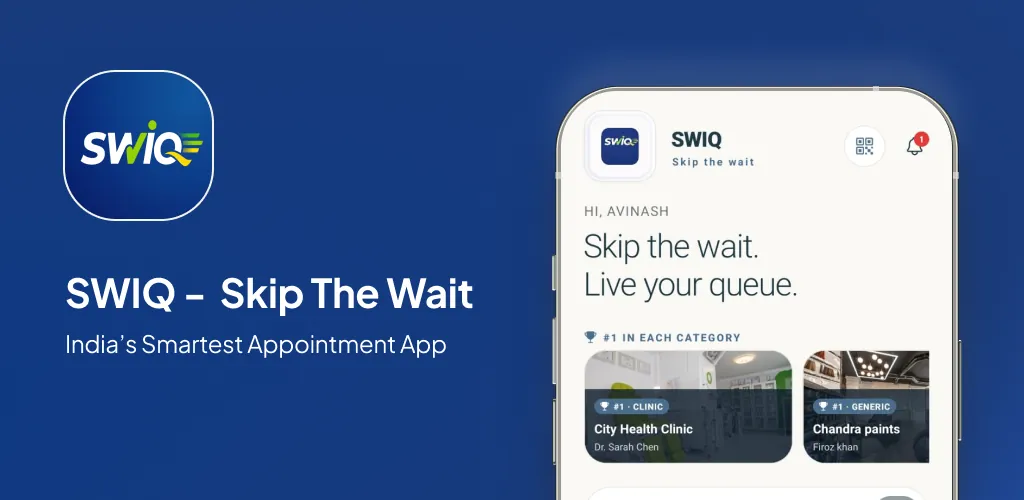
In India, appointment no-show rates range from 15% to 35% across clinics, salons, and service businesses. Each missed appointment wastes a slot that could have served another patient or client, paying for staff time, consumables, and overheads with no revenue. Reducing appointment no-shows in India requires a combination of financial commitment, timely communication, and a queue system that makes attendance easy.
Key takeaways
- Advance UPI booking fees reduce no-show rates by 40–60% immediately.
- Automated reminders at 24h and 2h before the appointment reduce no-shows by an additional 20–30%.
- Live queue tracking ensures patients arrive closer to their actual turn — reducing late arrivals that become no-shows.
- Easy rescheduling converts would-be no-shows into future appointments.
The real cost of appointment no-shows in India
A busy clinic in Jodhpur sees 40 patients a day. If 8 patients (20%) don't show up, the doctor loses approximately:
- 8 × ₹300 (consultation fee) = ₹2,400 in direct revenue
- Staff time to call, reschedule, and reconcile records: 30–45 minutes
- Lost opportunity for walk-in patients who could have taken those slots
- Staff morale impact from a half-empty afternoon queue
Over a month, that's ₹48,000–₹72,000 in lost revenue for a single doctor. For a multi-doctor clinic or a multi-stylist salon, the losses multiply proportionally. No-show reduction is not just a convenience — it's a revenue protection strategy.
Strategy 1: Advance UPI booking fee — the most effective no-show reducer
When a patient pays ₹200 to book a clinic appointment via UPI, they have a financial reason to attend. The slot is no longer just a name in a register — it's a paid commitment. Here's how to implement this on SWIQ:
- In the SWIQ dashboard, go to Services → Edit Service.
- Set a Booking Fee — ₹100–₹500 for clinics, ₹50–₹200 for salons.
- Select Online payment via Cashfree (UPI, card, netbanking).
- Configure your cancellation and refund policy — e.g., full refund if cancelled 24h before, no refund within 2h.
- Publish — the fee appears on the customer's booking screen immediately.
Expected impact: 40–60% reduction in no-shows within the first 30 days.
Important: The booking fee should be credited against the service fee on the day of the visit. If a consultation is ₹500 and the booking fee is ₹200, the patient pays ₹300 at the counter. This prevents patients from feeling double-charged.
Setting the right booking fee amount
The fee should be high enough to create commitment, but not so high that it deters genuine bookings:
- General physician / GP clinic: ₹100–₹200
- Specialist clinic (dermatologist, orthopaedic): ₹200–₹500
- Basic salon service (haircut, threading): ₹50–₹100
- Premium salon service (colour, treatment): ₹150–₹300
- Spa treatment (massage, facial): ₹300–₹1,000
- Diagnostic lab test (blood, urine): ₹100–₹200
Strategy 2: Automated reminders at the right time
SWIQ sends automated push notifications and email reminders at two critical points:
- 24 hours before: "Your appointment with [Provider] is tomorrow at [Time]. Token #[N]. Tap to view status."
- 2 hours before: "Your appointment is in 2 hours. Current queue status: Token [N-2] is being served."
The 2-hour reminder is particularly effective because it gives the patient actionable information — "only 2 people ahead of me, I should leave now" — rather than a generic nudge.
Expected impact: 20–30% reduction in no-shows from reminders alone, independent of advance payment.
Pro tip: The reminder should include the live queue link so the patient can check their token position before deciding when to leave home. This is especially important for patients who travel more than 30 minutes to reach the clinic.
Strategy 3: Live queue tracking — eliminating "arrival anxiety"
A less obvious cause of no-shows in Indian clinics is arrival anxiety — the fear of arriving too early and waiting hours, or arriving too late and missing the slot. When a patient has no visibility into the queue, the risk of "I'll skip it today" is higher.
SWIQ's live queue tracking eliminates this by showing the patient exactly where they stand:
- Current token being served: "Token 14 of 24 is now being seen"
- Your token: "Your token: 18"
- Estimated wait: "~20 minutes"
- Delay clock: "Doctor is running 8 minutes late"
Armed with this information, a patient 25 km away knows exactly when to leave. They arrive fresh, on time, and ready to be seen — rather than having waited in the reception for 90 minutes before their turn.
Expected impact: 10–15% additional reduction in no-shows, particularly from patients who live far from the clinic or have limited mobility.
Strategy 4: Easy rescheduling to convert no-shows into future bookings
Many patients in India don't show up to appointments because they forgot to cancel — not because they stopped wanting the service. Easy rescheduling converts those missed appointments into future revenue:
- SWIQ allows patients to reschedule directly from their booking confirmation screen.
- Rescheduling within the allowed window does not forfeit the advance booking fee.
- The patient selects a new slot, the old slot opens up for another booking, and the advance payment carries over.
When rescheduling is easier than not showing up, patients choose to reschedule rather than disappear. This keeps your calendar full and maintains the patient-provider relationship.
Strategy 5: Waitlist management to fill cancelled slots instantly
Even with the best no-show prevention, some cancellations will happen. The question is whether those slots go to waste or get immediately filled from a waitlist. SWIQ's slot management allows:
- When a patient cancels, the slot immediately becomes available for new bookings.
- Providers can maintain a manual waitlist and offer freed slots to the next patient.
- The booking link is always live, so patients searching for a "today" or "tomorrow" slot can find and book cancelled openings instantly.
A well-managed waitlist means that every last-minute cancellation is filled within minutes — not left empty.
No-show reduction strategies by industry
Clinics and hospitals
Priority: advance UPI fee + automated reminders + live queue tracking. The combination reduces OPD no-shows to under 5% for most SWIQ users.
Salons and beauty parlours
Priority: advance UPI fee (even ₹50 is effective) + easy rescheduling. Weekend peak slots should always require advance payment.
Spas and wellness centres
Priority: advance payment (higher ₹300–₹1,000) + 24h reminder + live queue tracking for multi-treatment sessions.
Diagnostic labs
Priority: advance UPI + automated "fasting reminder" 12h before for blood tests. Patients who forgot they were fasting often skip the test — a targeted reminder prevents this.
Measuring your no-show reduction success
Track these metrics monthly on SWIQ's analytics dashboard:
- No-show rate: (No-shows / Total bookings) × 100. Target: below 5%.
- Cancellation rate: (Cancellations / Total bookings) × 100. Target: 10–15% (cancellations are better than no-shows because the slot can be refilled).
- Reminder open rate: Percentage of reminder notifications opened. Useful for understanding which notification timing drives action.
- Revenue per slot: Track whether advance booking fees are increasing per-slot revenue.
Compare these metrics month-on-month. A well-implemented no-show reduction strategy should show measurable improvement within 30 days.
Implementing just Strategy 1 (advance UPI booking fee) on SWIQ will reduce your no-show rate by 40–60% within 30 days. Set up your free account today.
Official resource
For healthcare appointment management best practices, see the National Health Systems Resource Centre (NHSRC) guidelines on outpatient department management efficiency in Indian hospitals.
Frequently asked questions
What is the most effective way to reduce appointment no-shows in India?
The most effective strategy is collecting an advance UPI booking fee at the time of appointment booking. A financial commitment of ₹50–₹500 reduces no-show rates by 40–60%. Combined with automated reminders 24h and 2h before, attendance rates exceed 90%.
How much advance booking fee should I charge to reduce no-shows?
For clinics: ₹100–₹300. For salons: ₹50–₹150. For spas: ₹200–₹500. The fee should create commitment without deterring genuine bookings.
Do automated SMS or push reminders reduce no-shows in India?
Yes. Automated reminders 24 hours and 2 hours before reduce no-show rates by 20–30% on their own. Combined with advance payment, the effect reaches 50–60% reduction.
What should I do when a patient or client is about to miss their appointment?
SWIQ sends automated "almost your turn" notifications via push alert. If the patient does not respond, the receptionist can mark them as skipped and call the next token — keeping the queue moving without disruption.
Can I reduce no-shows without charging a booking fee?
Yes, though the effect is smaller. Automated 24h and 2h reminders, live queue tracking, and easy rescheduling options collectively reduce no-shows by 20–35% without any advance fee.
Reduce your no-show rate with SWIQ
Advance UPI fees, automated reminders, live queue tracking — all the tools you need to keep your calendar full.
Start Free →