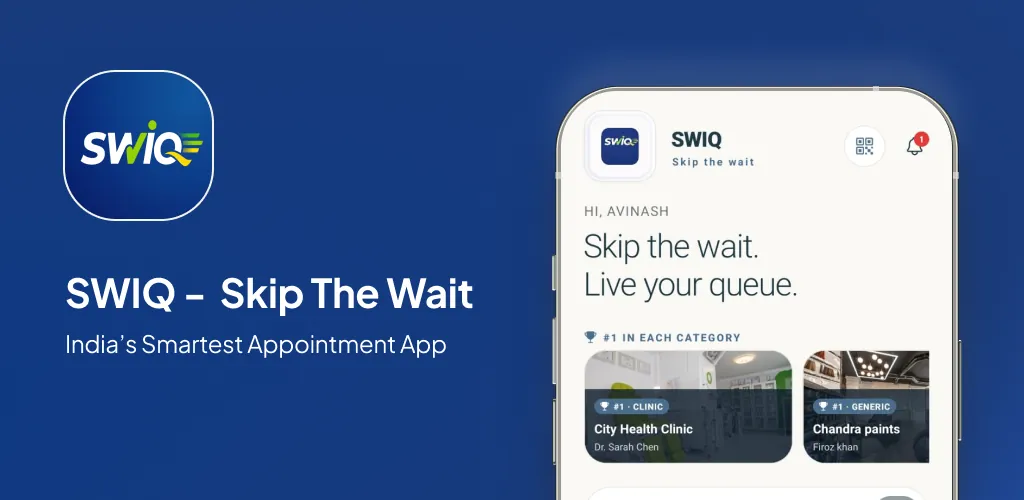
AI appointment scheduling is transforming how service providers manage their calendars. Traditional scheduling relies on fixed time blocks and manual oversight, leaving providers vulnerable to no-shows, gaps, and inefficient resource allocation. Smart algorithms analyze historical booking data, customer behavior, and real-time demand to recommend optimal slots that keep calendars full and customers satisfied.
Key takeaways
- AI scheduling adapts to real booking patterns, not just fixed templates.
- Smart overbooking reduces no-show impact without double-booking risk.
- Data-driven slot recommendations improve customer satisfaction and retention.
- SWIQ provides the analytics foundation for AI-enhanced scheduling decisions.
Why AI matters for appointment scheduling
Most appointment systems treat every time slot equally, ignoring that certain hours attract more cancellations, some customers book repeatedly while others disappear, and seasonal patterns shift demand unpredictably. AI appointment scheduling addresses these realities by learning from your actual booking data instead of relying on static rules.
Providers using AI-driven insights can anticipate demand surges, prepare for slow periods, and adjust staffing before problems arise. This proactive approach replaces the reactive cycle of filling gaps after they appear and scrambling to cover unexpected rushes.
How smart algorithms reduce no-shows
No-shows cost service businesses revenue and disrupt provider schedules. AI addresses this by analyzing factors like booking lead time, customer history, day-of-week patterns, and weather data to predict which appointments are most likely to be missed.
Rather than blanket overbooking, smart systems apply targeted strategies: sending reminders at mathematically optimal times, suggesting waitlist customers for slots with high cancellation probability, and adjusting confirmation requirements based on risk scores. SWIQ's booking analytics help providers identify these patterns without requiring complex data analysis.
Optimizing provider calendars with data
Calendar optimization goes beyond filling every slot. AI considers service duration, preparation time, travel between locations, and provider preferences to create realistic schedules. It identifies patterns like which services tend to run long, when providers perform best, and how break placement affects afternoon productivity.
The result is a calendar that reflects actual capacity rather than theoretical availability. Providers spend less time managing schedule chaos and more time delivering quality service. SWIQ's shift-based scheduling tools provide the structured data that makes these optimizations possible.
Implementing AI scheduling with SWIQ
SWIQ combines provider-controlled availability with the analytics foundation needed for intelligent scheduling. Providers publish real availability while the platform tracks booking patterns, completion rates, and timing data that feed AI optimization models.
Start by ensuring clean data: consistent statuses, accurate timestamps, and complete booking records. Then use SWIQ's reporting to identify your highest-impact optimization opportunities. Whether you focus on no-show reduction, gap filling, or demand prediction, the platform provides the reliable data foundation that makes AI appointment scheduling effective.
Practical next step: audit your current booking data for completeness and consistency. AI scheduling works best when built on accurate historical records of bookings, completions, and cancellations.
Frequently asked questions
What is AI appointment scheduling?
AI appointment scheduling uses machine learning algorithms to analyze booking patterns, predict no-shows, and automatically optimize calendar availability for providers and customers.
How does AI reduce appointment no-shows?
AI reduces no-shows by identifying high-risk bookings, sending smart reminders at optimal times, and adjusting overbooking strategies based on historical attendance patterns.
Can SWIQ use AI for scheduling optimization?
Yes. SWIQ combines provider-controlled availability with smart analytics that help identify patterns, optimize slot utilization, and reduce gaps in provider calendars.
See SWIQ in action
Explore provider-controlled availability, QR booking, live tokens, delay tracking, staff access, and enterprise dashboards.
Launch the SWIQ web app